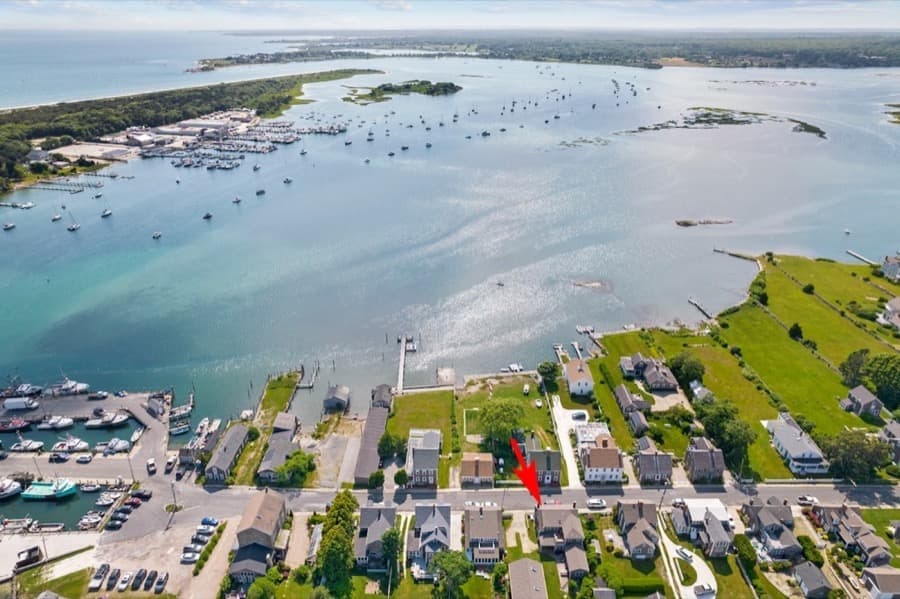
The House
Near Central Village in Westport, a modern dwelling went up that caused considerable controversy. Open construction. Large windows. Geometric organization. It looked nothing like the Colonials, the Federals, the Greek Revivals, or the Victorians that defined the town's architectural character. Neighbors had opinions. The town had opinions. Everyone had opinions. That's Westport.
The Debate
The criticism was about aesthetics: this house didn't fit. It didn't look like Westport. It didn't honor the tradition. The defense was about function: it served its owners' specific needs, the same way the Colonial-era homes served theirs, the same way the Federal-era homes served theirs. The Greek Revival captains didn't ask permission to put columns on a fishing village house. The Victorians didn't apologize for ornate brackets in a town of Quaker simplicity. Every generation of Westport building has been, in its own time, the new thing that didn't fit yet.
The Thread
This is the thread that runs through all of Westport's architecture, from the 1699 Gifford farmstead to the tract homes of Holly Heights to the modernist experiment near Central Village: people building what they need, where they want to live. The homes that last become the tradition. The ones that don't get replaced by something else. A century from now, the controversial house near Central Village will either be a landmark or a footnote. The town will decide. That's how it's always worked.
Personal Expression
The book on Westport architecture frames the modernist house as a continuation of the town's tradition of personal expression through architecture. That framing is generous and accurate. A Quaker meetinghouse is personal expression. A widow's walk is personal expression. A Victorian porch with decorative brackets is personal expression. Large windows and geometric organization are personal expression. The medium changes. The impulse doesn't.
What Makes a Town
Westport's character comes from the accumulation of individual choices made by people who decided to build here. Some of those choices were conservative. Some were radical. All of them added to the texture of a town that's been building and rebuilding itself since before it was a town. The controversy over one modern house is just the latest chapter in a conversation that's been running since Christopher Gifford laid out his first sixty acres in 1699.
What was the name of the Native American settlement at what is now Westport Point?